AI-assisted ServiceNow delivery was the goal. Then a second goal crept in; use AI to build it.
There's no team and no funding behind this one; there's me, a day job, a family, dogs with opinions about play time, and a second shift that starts when all of those are done. That's the schedule the whole thing runs on.
So here's what a build day actually looks like. At some point in the evening, day job done, dogs settled, laptop out on the sofa. I don't spend the hours coding; I spend them writing briefs, the sort I'd give a contractor I didn't quite trust yet. What to build. What good looks like. What it must not touch. Then I queue the lot and go to bed.
Overnight, the factory (I named it Grand Central) works the queue. Each job is a packet: the brief, the boundaries it must stay inside, and the tests that define done. A story in Agile speak. Nothing merges overnight, ever.
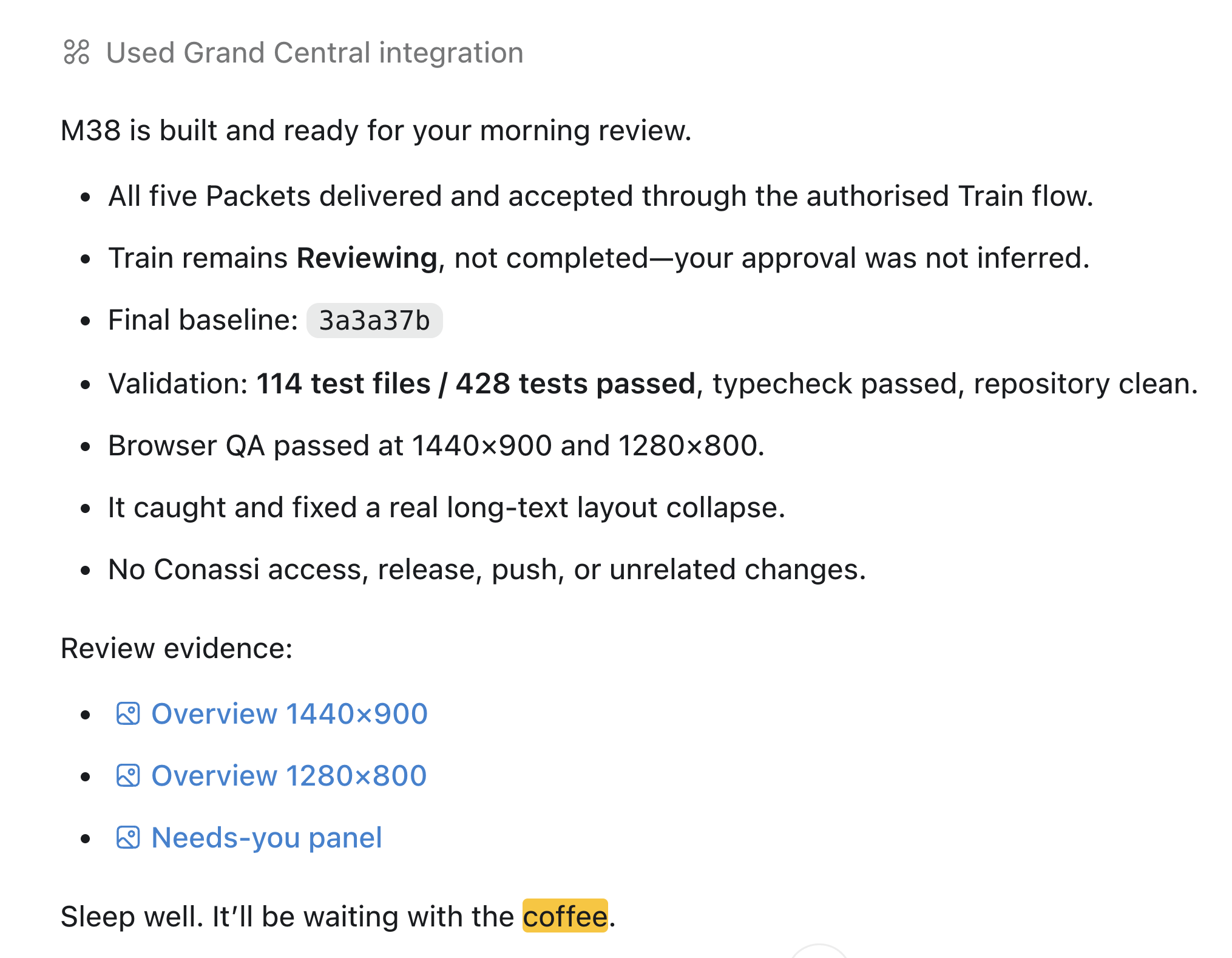
There's a second pair of eyes, and they aren't mine. Codex writes the code; Claude reviews every packet before I see it. Two models, two vendors; they often make different mistakes. Fail review and Claude sends the packet straight back to Codex, notes attached, round after round, while I'm asleep. Drift outside the brief and they argue it out first: agreement is logged for my morning verdict on whether the work lives; a deadlock parks the job until I referee. By morning, most arguments have already been had.
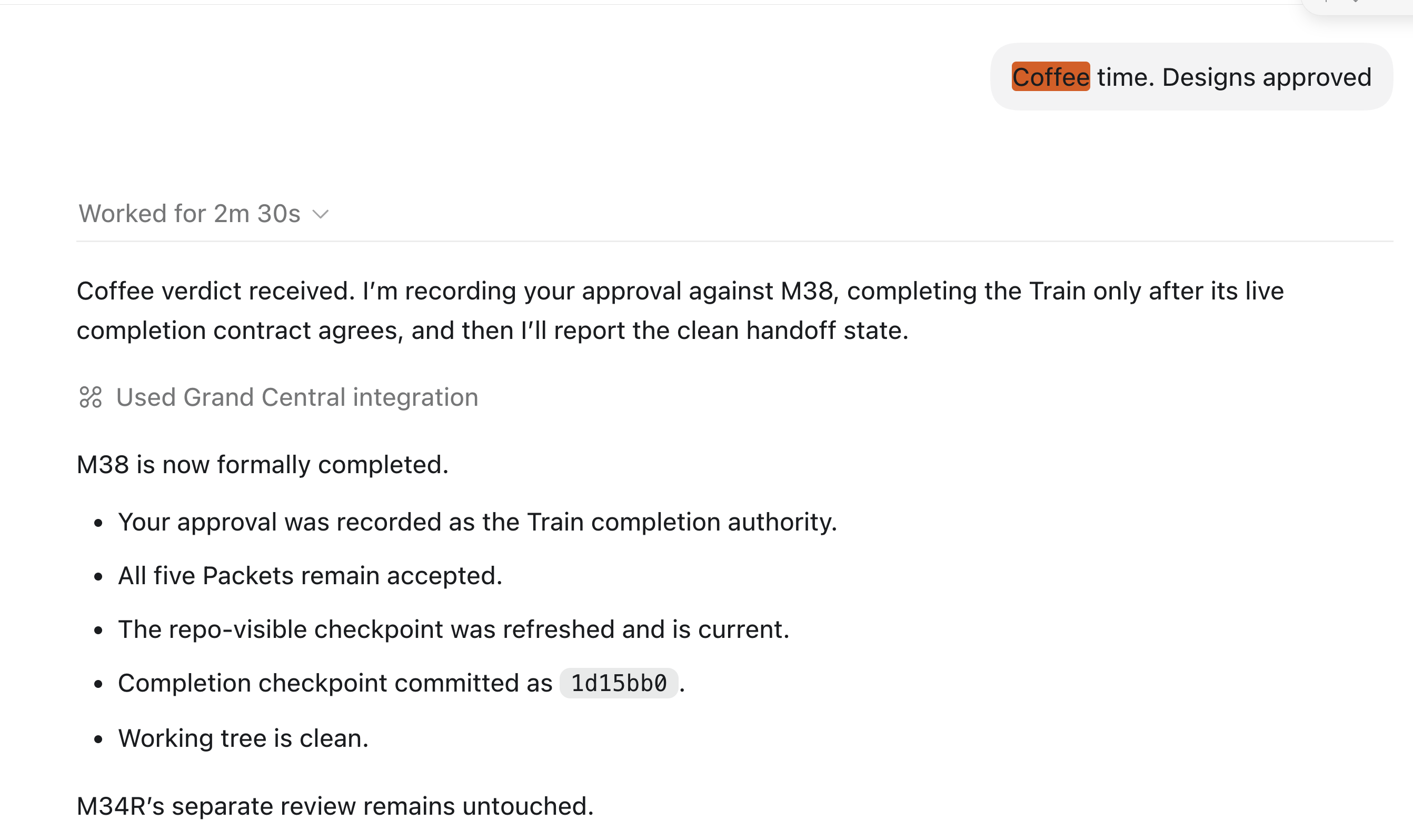
Every morning over coffee, twenty minutes reading what survived the night: approve this, bin that, send that one round again. That twenty minutes is where Grand Central earns its keep, which takes some admitting from someone who's been paid to type since the Lotus Notes days.
Taking time out to build Grand Central wasn't an easy decision. It meant parking the AI-assisted delivery work while the evenings went on scaffolding instead. Every evening spent on it felt like time being stolen from the real goal.
The first morning Grand Central handed me a reviewed queue over coffee, I knew. It was the right call.
Keep that rhythm going and the numbers turn silly. In its first three and a half days the factory delivered 247 packets across 31 completed trains; that's 31 sprints in half a week if you're keeping Agile score. Eye-catching, but the gates are the point: nothing merged without surviving review and my verdict.
The lesson sitting under all of it is the first wall's lesson, one level up: the building was never the slow part. Deciding what to build, checking what comes back, finding the hours; that's where the time actually goes.
Next time: the rig that marks its own homework, and the evening it proved me wrong.
What about you: does your side project get evenings, mornings, or stolen minutes? Call it in the comments.
First published on LinkedIn, 22 July 2026. The conversation lives there; the writing lives here.